
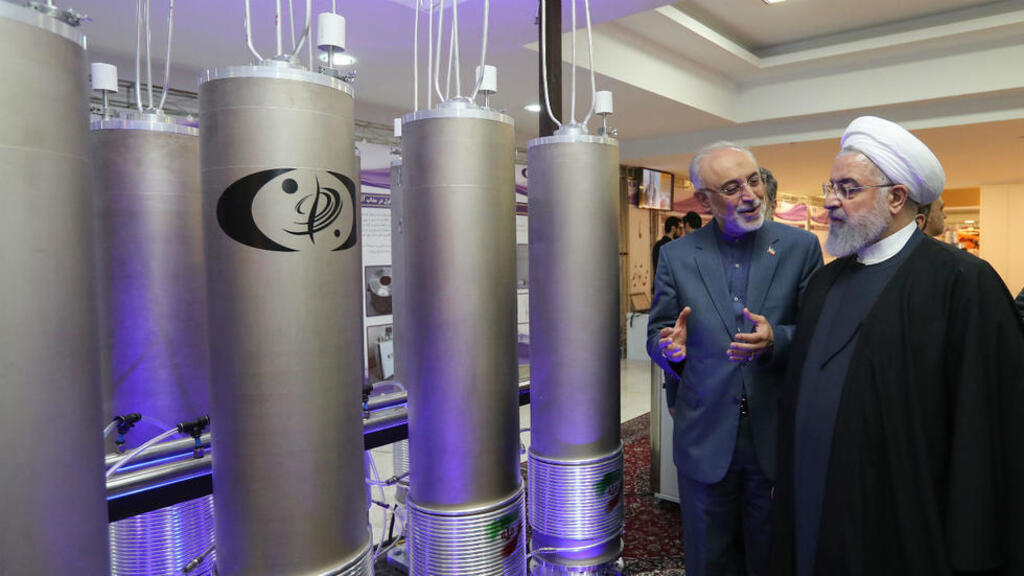
In the context of the American-Israeli war against Iran, the hypothesis of a U.S. commando operation aimed at militarily intervening to take control of a stockpile of uranium estimated at around 440 kg and transferring it out of Iran has been raised. However, carrying out such an operation would remain extremely difficult—if not nearly impossible—for strictly military reasons.
The digital media outlet Axios was the first to reveal this information on March 8, 2026, citing sources at the White House and indicating that the Trump administration was studying this option. The idea would be to deploy American and Israeli special forces on Iranian territory in order to seize uranium enriched to 60%, which would deprive Iran of any possibility of producing a nuclear bomb in the coming years.
In theory, the success of such an operation could also bring the current war to an end.
However, the implementation of this scenario faces several major obstacles. The first, as highlighted by The Guardian, concerns the lack of precise information about the exact location of the enriched uranium. Three main facilities are capable of storing it: the site at Natanz, the one at Fordo, and the center in Isfahan. These facilities are monitored by the International Atomic Energy Agency as part of the international nuclear inspection program, but determining the exact location of the stockpile remains complex.
The second obstacle concerns the very nature of the military operation. The United States has several elite commando units, such as Delta Force, SEAL Team Six, the Navy SEALs, as well as Marine commandos and special units of the Air Force. However, these units generally conduct limited operations, such as hostage rescues or rapid targeted interventions, similar to the operation that led to the elimination of the Al-Qaeda leader, Osama bin Laden. These operations are usually very brief, often lasting less than an hour, and involve a limited number of personnel for the direct intervention.
3 In the case of an operation aimed at seizing enriched uranium in Iran, it would likely be one of the most complex intervention operations in the history of the U.S. military, if not in the history of modern armed forces. Such an operation would require the participation of a large number of commandos from different units, supported by ground forces such as the Rangers, who would need to be deployed in advance near the area of operations. It would also require significant air cover, particularly from helicopters and drones, which would expose the forces involved to considerable risks.
4 A major logistical challenge then arises: the departure point of the helicopters tasked with transporting the commandos. The U.S. aircraft carriers Abraham Lincoln, positioned south of the Arabian Sea, and Gerald Ford, deployed in the northern Red Sea, are located more than 1,500 kilometers from the suspected uranium storage sites in Iran. Furthermore, taking off from neighboring countries appears difficult, as helicopters do not fly at high altitudes like fighter jets such as the F-15 or F-35 in order to avoid air defense systems. In addition, they do not have sufficient fuel capacity to complete long round trips and cannot be refueled in flight like combat aircraft.
Moreover, the operation would not involve only military forces. It would also require the participation of experts and scientists specialized in the nuclear field to ensure the safe transport of radioactive materials.
The most significant risk, however, lies in the potential presence of Iranian special forces prepared to respond to such a scenario. Estimates indicate that Iranian special units are deployed in large numbers in various regions of the country, particularly near the nuclear facilities believed to house enriched uranium. These forces would be ready to engage in direct combat, or even carry out suicide actions, in order to prevent any attempt at a ground landing or the seizure of these strategic materials.
Another obstacle lies in the very difficulty of transporting enriched uranium. Even in peacetime, the transfer of nuclear materials is one of the most complex operations imaginable, subject to extremely strict security procedures and technical standards, requiring specialized equipment and rigorous conditions to avoid any radiological or security risks. This raises a critical question: how could such an operation be carried out in the middle of a war, under the threat of missiles and direct military confrontations?
In this context, former U.S. Secretary of Defense Mark Esper stated that such an operation would involve considerable risks. However, military realities and the history of commando operations suggest that carrying it out in the field would be close to impossible.
In light of these factors, the scenario of a military seizure of Iran’s enriched uranium appears more like a theoretical hypothesis than a truly practical option. The challenges related to intelligence, logistics, and military operations, as well as the risk of direct confrontation with Iranian forces, would make such an operation extremely complex and potentially very costly.
It is likely that United States Special Operations Command (SOCOM) itself does not believe in the feasibility of an operation on such a scale. If such an operation had been realistically achievable, even with above-average risks, it would probably have been considered as a way to deprive Iran of its enriched uranium for many years, bring the war to an end, and definitively break Iran’s ambition to acquire nuclear weapons.
In this context, former U.S. Secretary of Defense Mark Esper stated that such an operation would involve considerable risks. However, military realities and the history of commando operations suggest that carrying it out in the field would be close to impossible.
In light of these factors, the scenario of a military seizure of Iran’s enriched uranium appears more like a theoretical hypothesis than a truly practical option. The challenges related to intelligence, logistics, and military operations, as well as the risk of direct confrontation with Iranian forces, would make such an operation extremely complex and potentially very costly.
It is likely that United States Special Operations Command (SOCOM) itself does not believe in the feasibility of an operation on such a scale. If such an operation had been realistically achievable, even with above-average risks, it would probably have been considered as a way to deprive Iran of its enriched uranium for many years, bring the war to an end, and definitively break Iran’s ambition to acquire nuclear weapons.
Thus, it appears that Washington has two main options to overcome this challenge: preventing Iran from acquiring the capability to produce a nuclear bomb either by seizing or confiscating its enriched uranium, although Tehran consistently maintains that its nuclear program is peaceful and denies any intention of developing a nuclear weapon.
The first option would involve a ground invasion of Iran, similar to the military operation carried out by the United States and the United Kingdom in Iraq in 2003 to overthrow the regime of Saddam Hussein. However, such a scenario seems almost impossible, as it would require the deployment of around half a million American soldiers, along with military and logistical preparations that could last more than a year. Even under these conditions, the outcome of such an operation would remain uncertain, given the vast size of Iranian territory, which covers nearly 1.6 million square kilometers. In addition, there are military and paramilitary forces exceeding three million members, as well as a significant military arsenal. Consequently, reproducing the Iraqi scenario in Iran appears extremely difficult, if not impossible.
The second option would be to prioritize the diplomatic route through negotiations between Iran and the major powers, with the aim of reaching an agreement that would guarantee Iran the right to possess enriched uranium for peaceful purposes under strict international supervision. However, recent developments—particularly after the war that began on February 28, 2026—make this option even more complex. It is unlikely that Iranian leaders, or even Iranian public opinion, would accept such a solution under the current circumstances. Many indications also suggest that Iran’s position could harden in the coming period, while Washington might adopt a strategy based on indirect military pressure or on limited and intermittent military operations against Iran in the years ahead.